








At a Glance
Operation Fistula is a global nonprofit, partnering with grassroots organizations to fund and coordinate fistula treatment for women and girls with the least access to surgical services. With a small program team stretched across a growing footprint, Operation Fistula worked with Vera to build two Claude skills that streamline surgery data review, surgeon follow-up, and program data queries, all within a HIPAA-compliant environment.
The Client
Operation Fistula funds and coordinates fistula surgeries performed by local surgeons across 22 countries, tracking outcomes through CommCare, Airtable, and Google Sheets. The organization works to raise awareness of obstetric fistula, a treatable childbirth injury that remains widely misunderstood, and to ensure women and girls affected by it have access to surgical care and support.
The Challenges
As Operation Fistula scaled across countries and expanded its scope of services, the operational load on its small program team grew. Reviewing surgery records for data quality issues, drafting follow-up emails to surgeons in multiple languages, and running ad hoc queries across systems were all high-volume, repetitive tasks that pulled program officers away from deeper analysis and implementing program improvements.
The organization had informally explored AI tools but had no structured approach, governance framework, or clear view of where AI could add the most value. As a global health organization handling sensitive patient data, any solution also had to meet HIPAA compliance requirements.
Key challenges included:
Manual, record-by-record review of surgery data for quality issues Individually drafted multilingual follow-up emails to surgeons Program data queries that required technical knowledge or help from the most technical team member No governance framework or structured approach to AI adoption A hard requirement to keep patient data within HIPAA-compliant systems
The Solution
Vera led the engagement across four phases: 1) discovery, 2) design, 3) build, and 4) enablement. The team scoped and prioritized use cases from more than 20 initial ideas, assessing each against both technical feasibility and ethical fit, including a recommendation against a facial recognition approach to duplicate-record detection due to bias risk for the populations Operation Fistula serves.
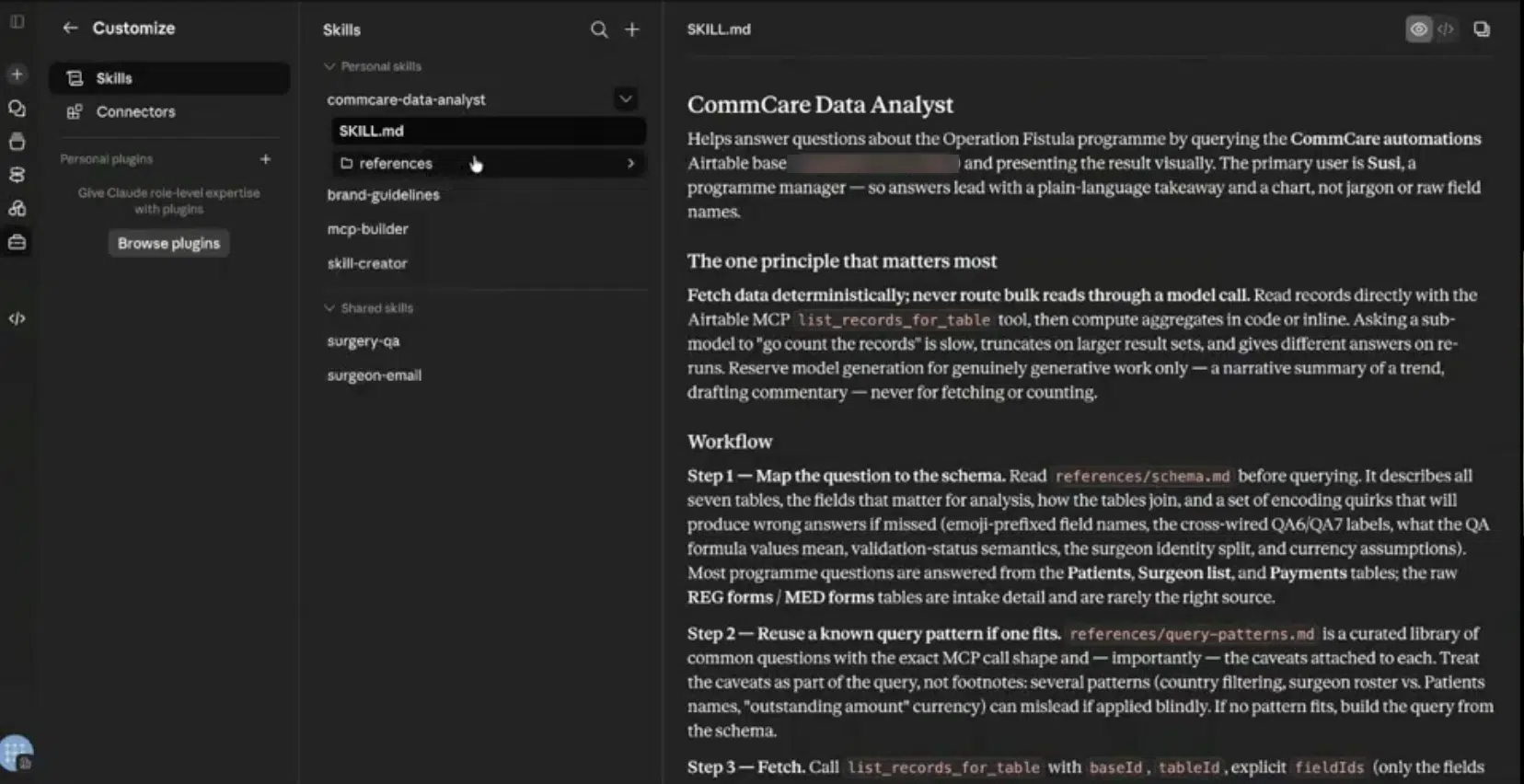
The Enterprise edition of Claude for Nonprofits met the HIPAA compliance requirement. Vera configured Claude's native connectors for Airtable, Google Sheets, and Gmail to Operation Fistula's existing schema and workflows, keeping data within current systems rather than introducing new infrastructure.
The Results
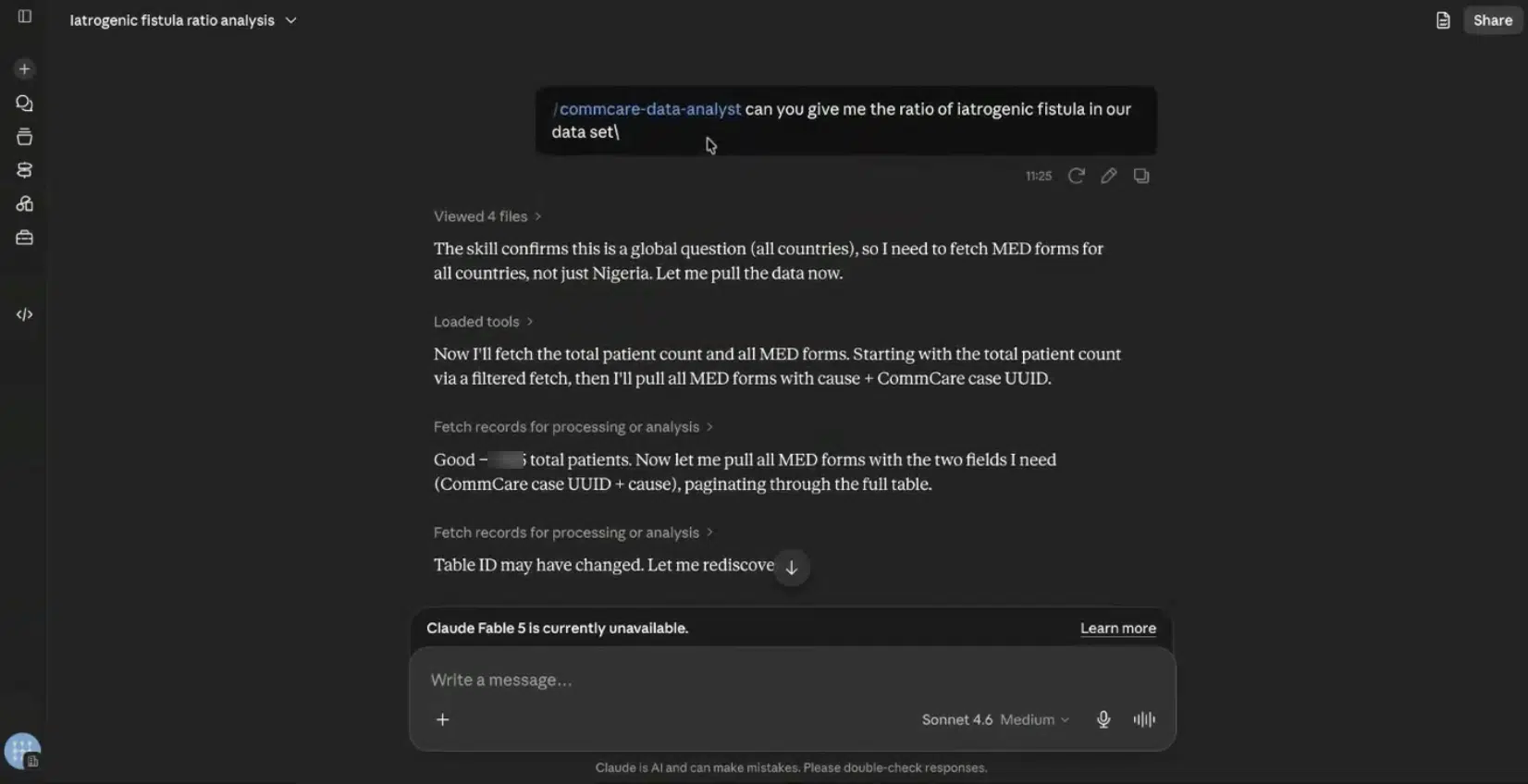
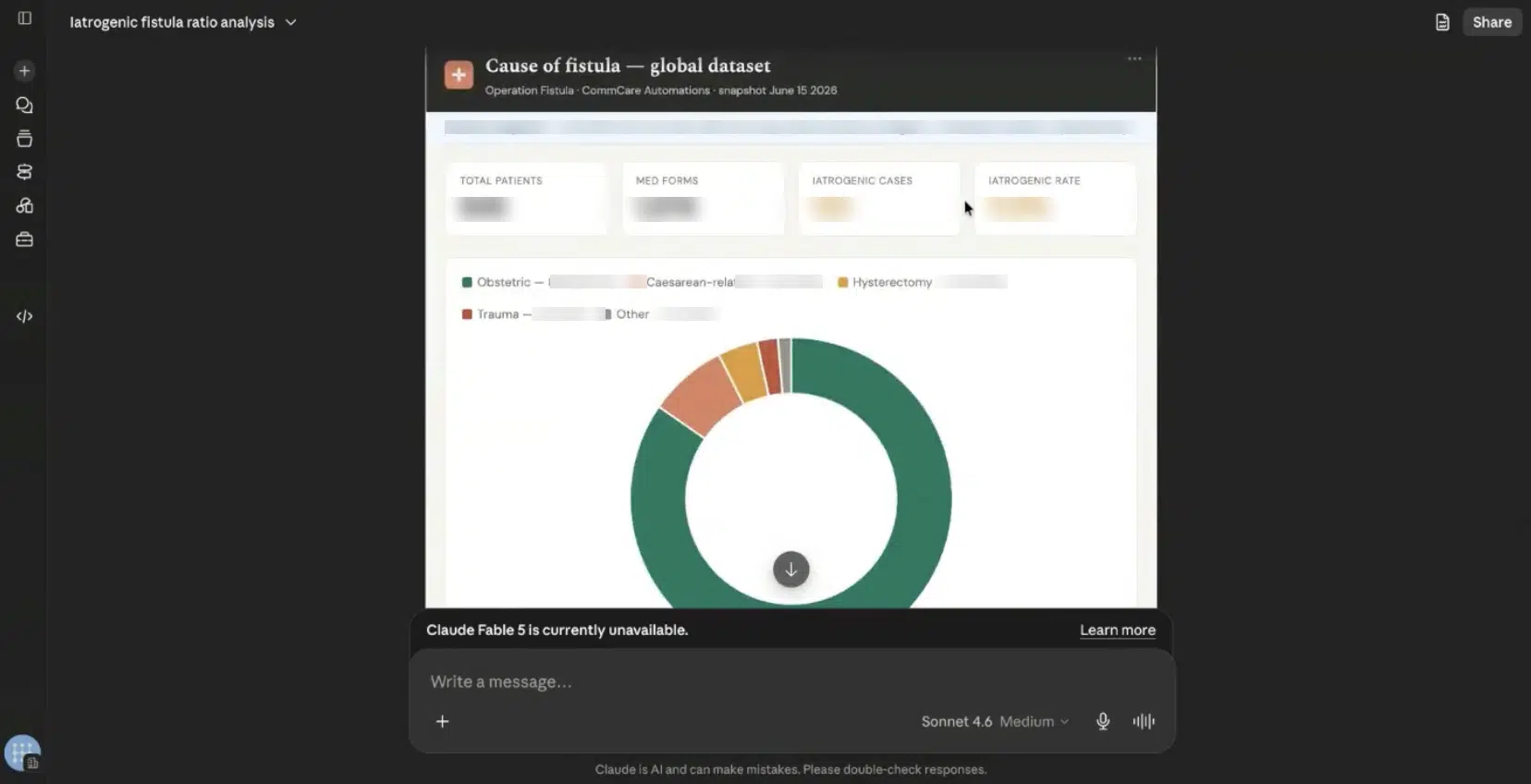
Operation Fistula's data went from a bottleneck to a self-serve resource. Reporting on patient and geographic data dropped from roughly 10 days of back-and-forth with a skilled analyst to about 30 minutes of self-serve querying. Surgical data analysis followed the same shift: instead of manually combing the database to answer questions about surgical volumes, outcomes, or geographic distribution, Operation Fistula's team now queries the organization's data directly and gets answers grounded in the data itself.
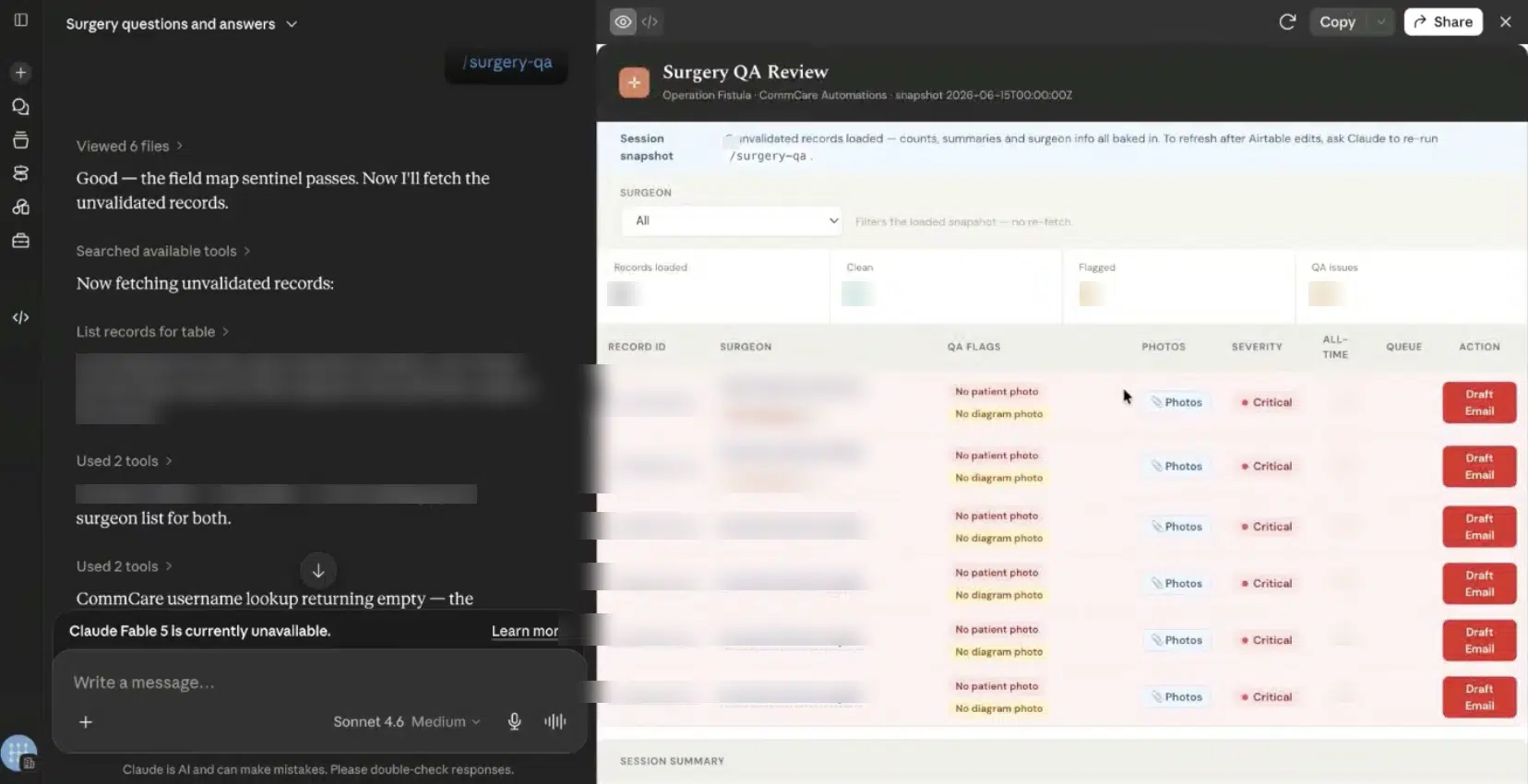
QA review moved from manual, record-by-record checks to a structured, session-based process, with clean records batch-approved in a single action. Surgeon follow-up communications now draft in English, French, and Portuguese directly from QA flags, routed to Gmail for human review before sending, replacing individually written, single-language emails.
Five weeks after kickoff, Operation Fistula had three working, HIPAA-compliant Claude-based skills live across the organization, for surgical data validation, communications drafting, and analytics querying, replacing ad hoc, individual use of chat tools with no connection to organizational data. The result is a team that spends less time assembling information and more time acting on it.
“There are levers to control everything… so many levers that you need somebody to help you guide you through that process”
– Seth Cochran, Founder & CEO, Operation Fistula
“It’s amazing to do things like get my program manager’s totals for the first six months of the year, and then be able to use that human-generated, human-validated number to test Claude and to test whether it’s accurately pulling numbers. And I can tell you that it has been [accurate].”
– Helen Davies, COO, Operation Fistula