Imagine you are working for a growing nonprofit organization and have identified a new technology solution that can streamline operations, enhance workflows, and amplify your organization’s overall impact. According to Salesforce’s Global Nonprofit Trends report, only 12% of nonprofits are considered ‘digitally mature,’ yet these organizations are four times more likely to achieve their mission goals.
In this blog, we cover three key questions to guide your budget proposal: what are you already spending money on, how will this pay off (ROI), and whether to build, buy, or configure.
Question 1: What Are You Already Spending Money On?
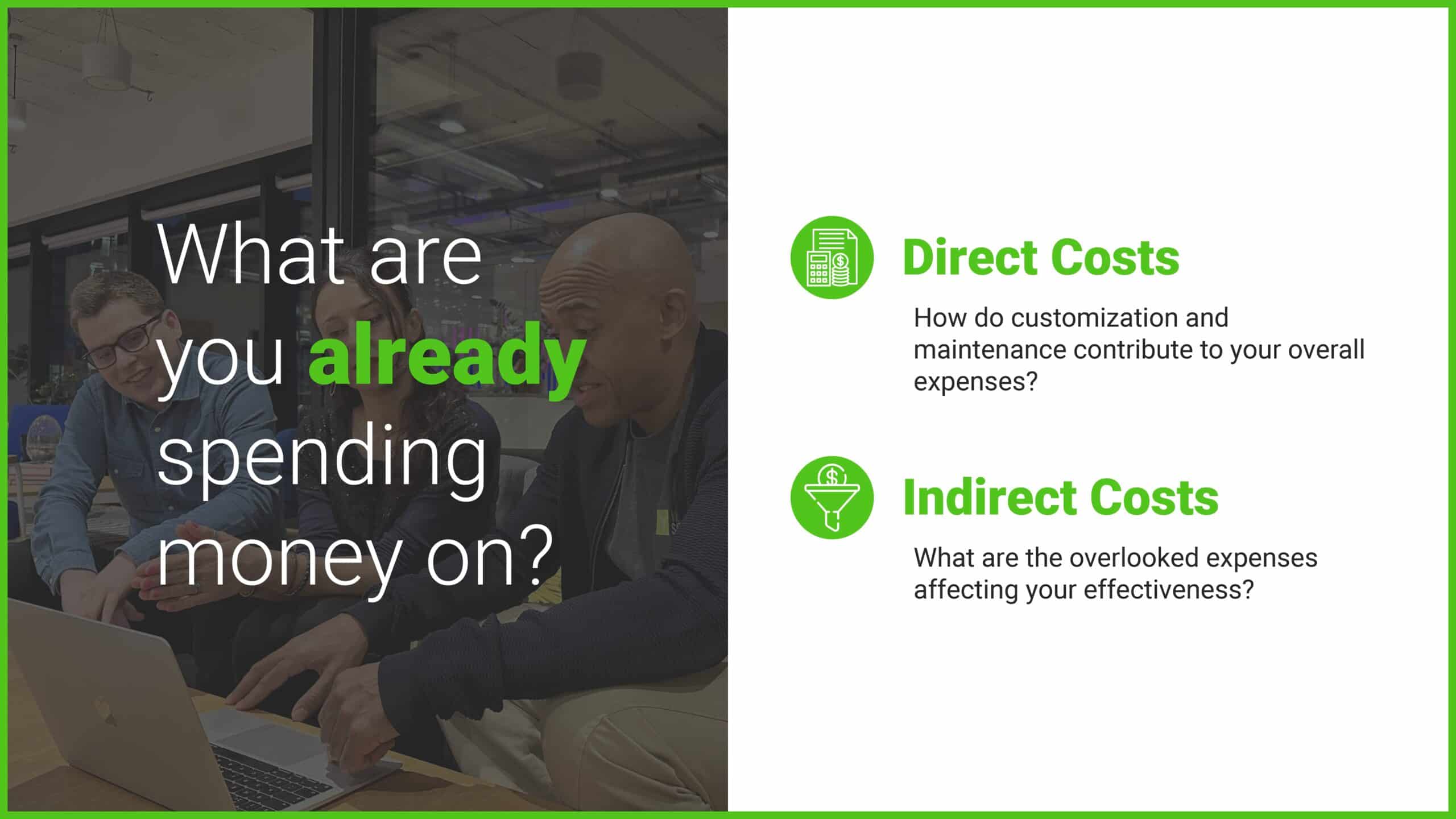
Before proposing a new technology solution, it’s essential to evaluate the costs and limitations of your current systems, encompassing both direct financial costs and hidden expenses.
Direct costs are tangible, measurable expenses easily attributed to the project: purchasing or leasing hardware/software, implementation and integration, staff time for system management, and ongoing maintenance contracts.
Indirect costs aren’t directly linked to a specific function but are essential for overall operation: overhead costs, security costs, and administration costs.
Question 2: Return on Investment — How Will This Pay Off?
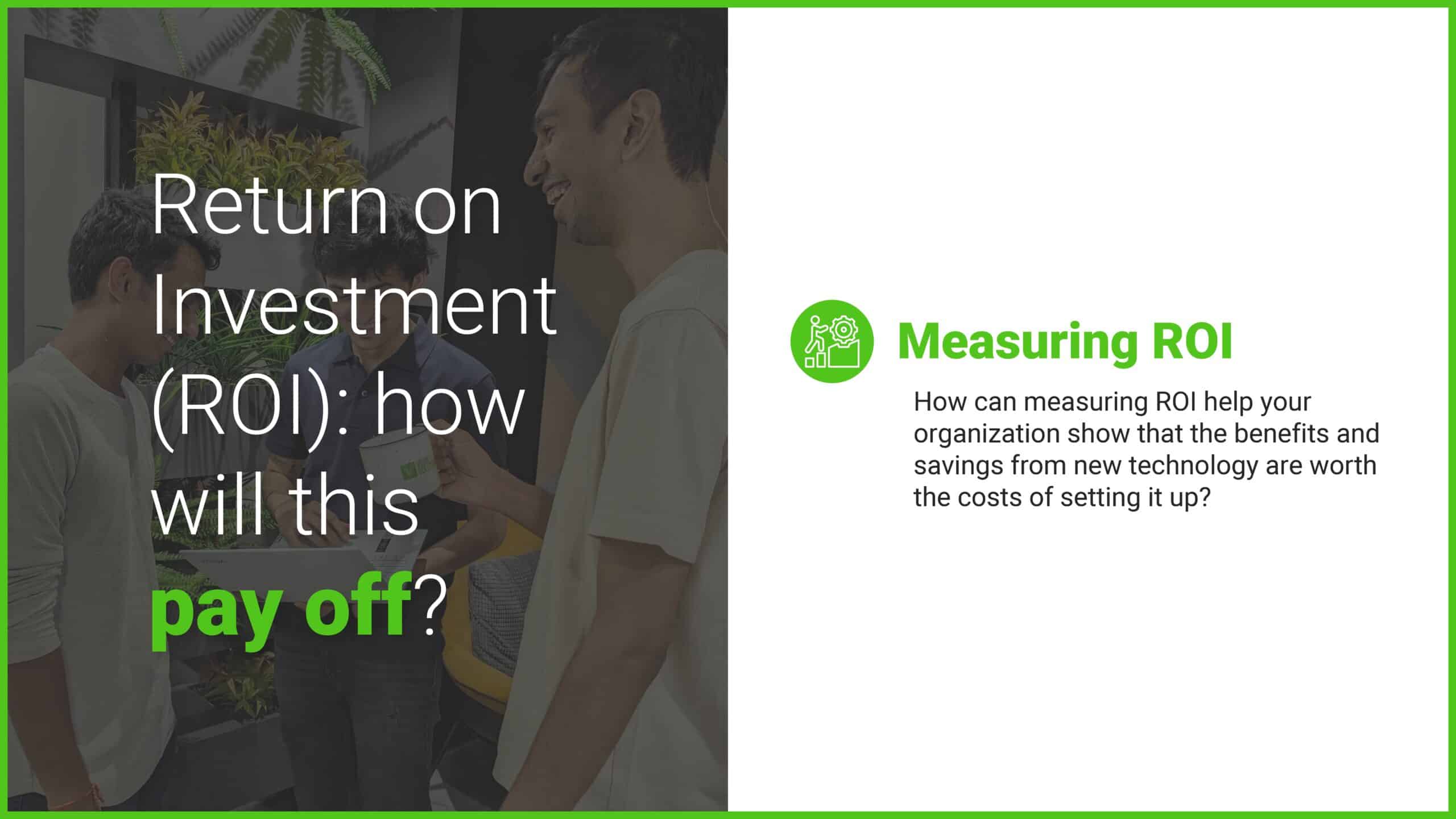
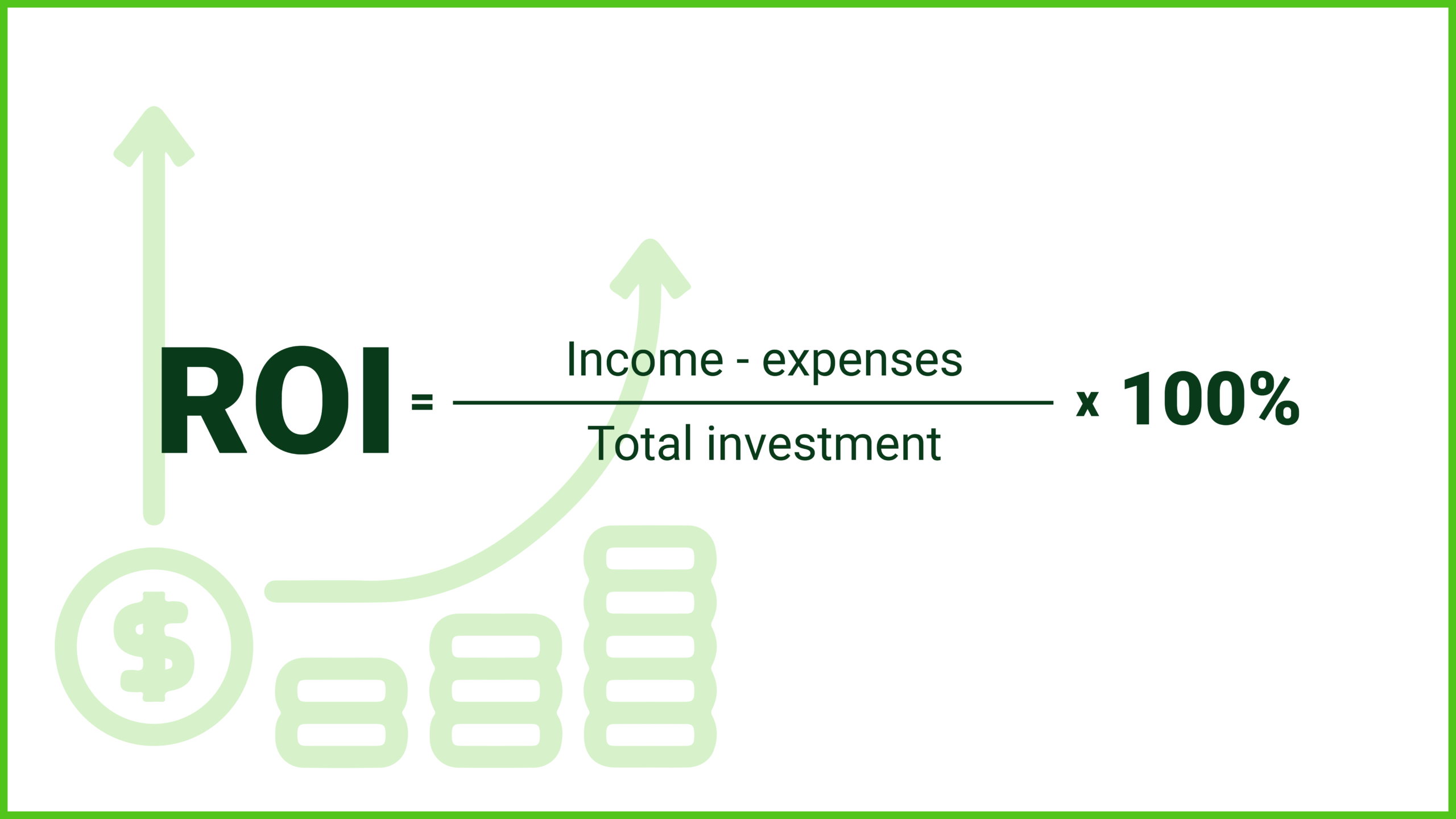
How much time and effort can the new system save? Smart organizations tally up all savings and benefits and compare them against the costs of deploying a new system to approximate Return on Investment (ROI). Gartner advises considering ROI across: quick wins (narrow scope, fast delivery), differentiating use cases (larger investment, time-to-value), and transformational initiatives (greater investment and risk, larger upside).
It’s important to be realistic when calculating ROI and to consider risk, complexity, and unknowns from the start — some investments may appear to have high ROI at first but come with hidden ongoing costs or technical debt.
Question 3: Build, Buy, or Configure?
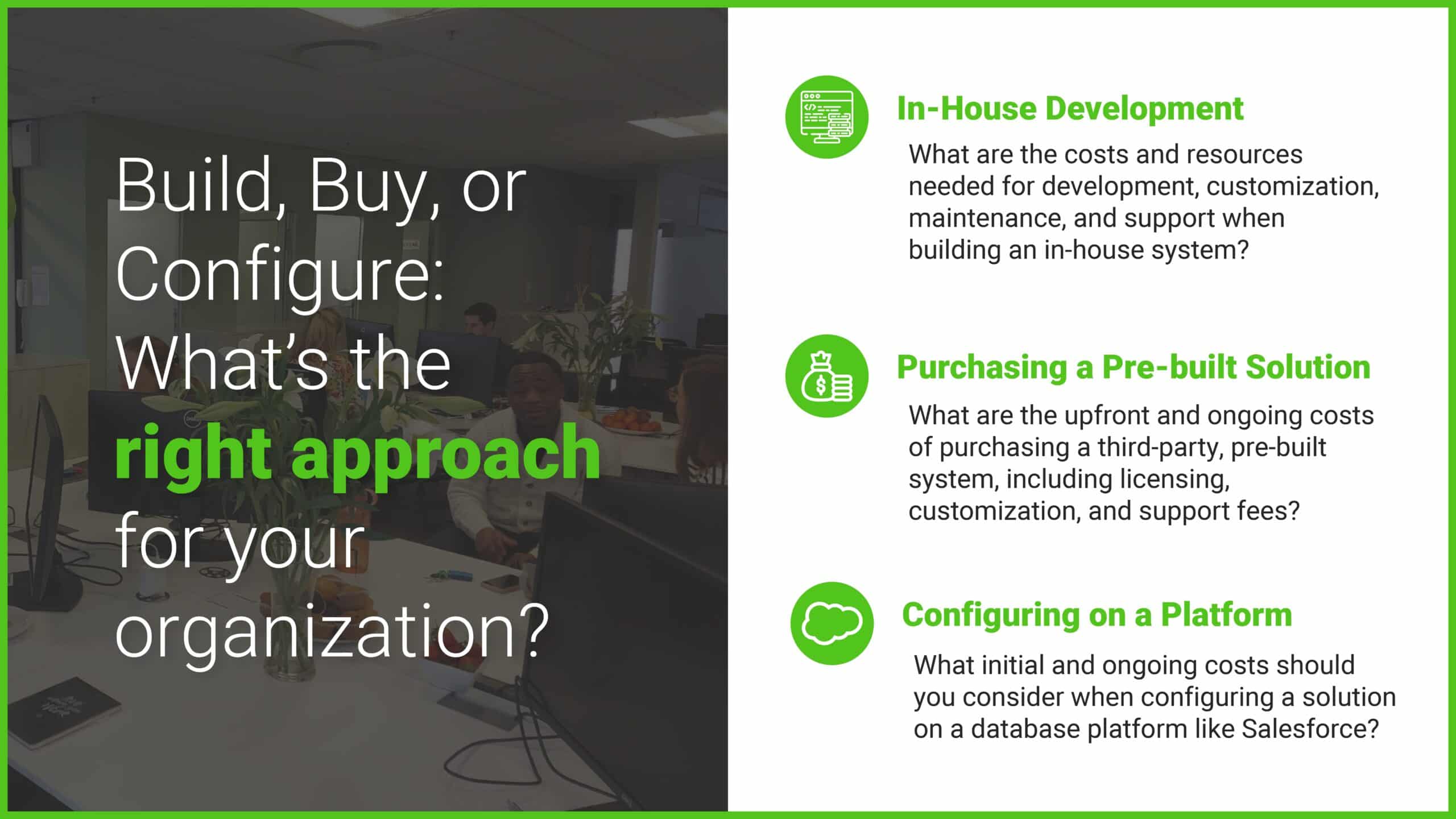
NGOs are often told they need to choose between developing an in-house solution or purchasing a third-party system. In reality, Buy vs Build has become more of a spectrum, as low-code platforms like Salesforce, Microsoft Dynamics, and Airtable give organizations ‘middle-ground’ options where ‘building’ can be done through clicks not code.
In-House Development: Creating a custom solution requires significant resources, time, skilled staff, and ongoing support, leading to higher labor costs and complexity.
Purchasing a Pre-built Solution: Off-the-shelf solutions usually come with lower upfront costs and faster time-to-value, offset by higher ongoing license costs.
Configuring on a Platform: Configuring a solution on a flexible database platform like Salesforce may be the ‘goldilocks’ option, combining full control with pre-built features, potentially launching in 3-6 months instead of 12+.
Balancing the Budget for a Successful Investment
Securing budget approval for a new system can be challenging, especially for resource-constrained NGOs. Fortunately, many tech companies provide free or discounted services for nonprofits, such as the Salesforce Power of Us Program. Once clear about available nonprofit discounts, create a clear budget comprising direct and indirect costs, estimate expected ROI, and weigh the options of building, buying, or configuring.
Organizations should not merely be thinking about how to secure budget approval but how to ensure that a new system provides enduring value. By approaching budget discussions with a strategic and thoughtful plan, you can future-proof your organization’s impact.
Why Choose Vera Solutions?
With over 14 years of experience working with nonprofits, Vera Solutions has been a leader in developing fundraising, portfolio and program management, impact measurement, and grant management solutions on the Salesforce Platform. Over $12 billion of programs, grants, and projects advancing the UN Sustainable Development Goals are managed using Vera’s flagship product, Amp Impact.
We also offer a large pool of highly skilled and experienced Salesforce Consultants, with over 350 active Salesforce certifications, experience successfully delivering over 1,000 projects in the social sector, and more than 430 customers working in 150+ countries.