
Together with Salesforce, we co-hosted an Amp Impact Summit for multilateral organizations on 11 February 2026. As with other Amp Impact Summits, the event served as a collaborative forum where agency representatives shared how they’re using Salesforce and Amp Impact in practice.
The session brought together colleagues from headquarters, joint funds, and specialized agencies to explore three core areas: corporate planning, grants management, and results-based management. The summit was designed as a peer learning space where agencies could hear directly from others on similar journeys.
Summary:
- Amp Impact is a Salesforce-native solution that centralizes grant management, program management, and monitoring & evaluation for social impact organizations on one platform.
- On 11 February 2026, Vera Solutions and Salesforce co-hosted a peer-learning summit in which multilateral agencies shared real-world Amp Impact use cases across three functional areas.
- Amp Impact helps replace fragmented planning tools, spreadsheet-based grant tracking, and disconnected performance data across regional offices and thematic teams.
- The summit covered three core use cases: corporate planning, grants management, and performance indicators and results measurement.
- Salesforce Agentforce can automate data pulls, flag underperforming outcomes, and handle routine partner queries, all enabled by Amp Impact’s unified data foundation.
Amp Impact: Built With and For the Social Sector
Amp Impact is our Salesforce-based solution for organizations pursuing social impact. First launched on the Salesforce AppExchange in 2017, it was built on insights from hundreds of digital transformation projects and developed in close consultation with customers from the start.
The Amp Impact Summit has been central to that journey. Since the inaugural edition in Amsterdam in April 2019, which brought together iNGOs, impact investors, and grantmakers to share challenges and shape the product roadmap, the summit has grown into a key moment for the global Amp Impact community. By December 2022, we hosted our fifth summit, with clients, partners, and colleagues gathering to exchange best practices and contribute to the product’s direction. Subsequent editions took the community to San Francisco, London, and Geneva, each building on the momentum of the previous. The February 2026 edition continued that tradition, bringing together multilateral organizations for peer learning and deep dives into three core functional areas.

Today, the platform brings together grant management, program management, and monitoring and evaluation in one configurable system, replacing complex spreadsheets with an integrated solution that works for grantees and grantors alike, from field teams to headquarters to funders. Amp Impact is now used by 17,000+ people across more than 150 countries to manage over $12.5 billion in development programs and grants, tracking 2.2 million results from 240+ projects using 580,000 indicators.

Amp Impact for Corporate Planning: From Fragmented Tools to a Connected System
The Challenge
Prior to adopting a unified platform, one headquarters team worked across separate tools, each dedicated to a distinct function: country program documents, indicator data entry, integrated work plans, and annual reporting. As these tools operated independently, staff routinely relied on manual Excel transfers to move data between them.
How Amp Impact Helps?
Amp Impact brings the entire planning cycle onto one platform, with frameworks, indicators, work plans, budgets, and risks all cross-linked.
1. Planning Phase
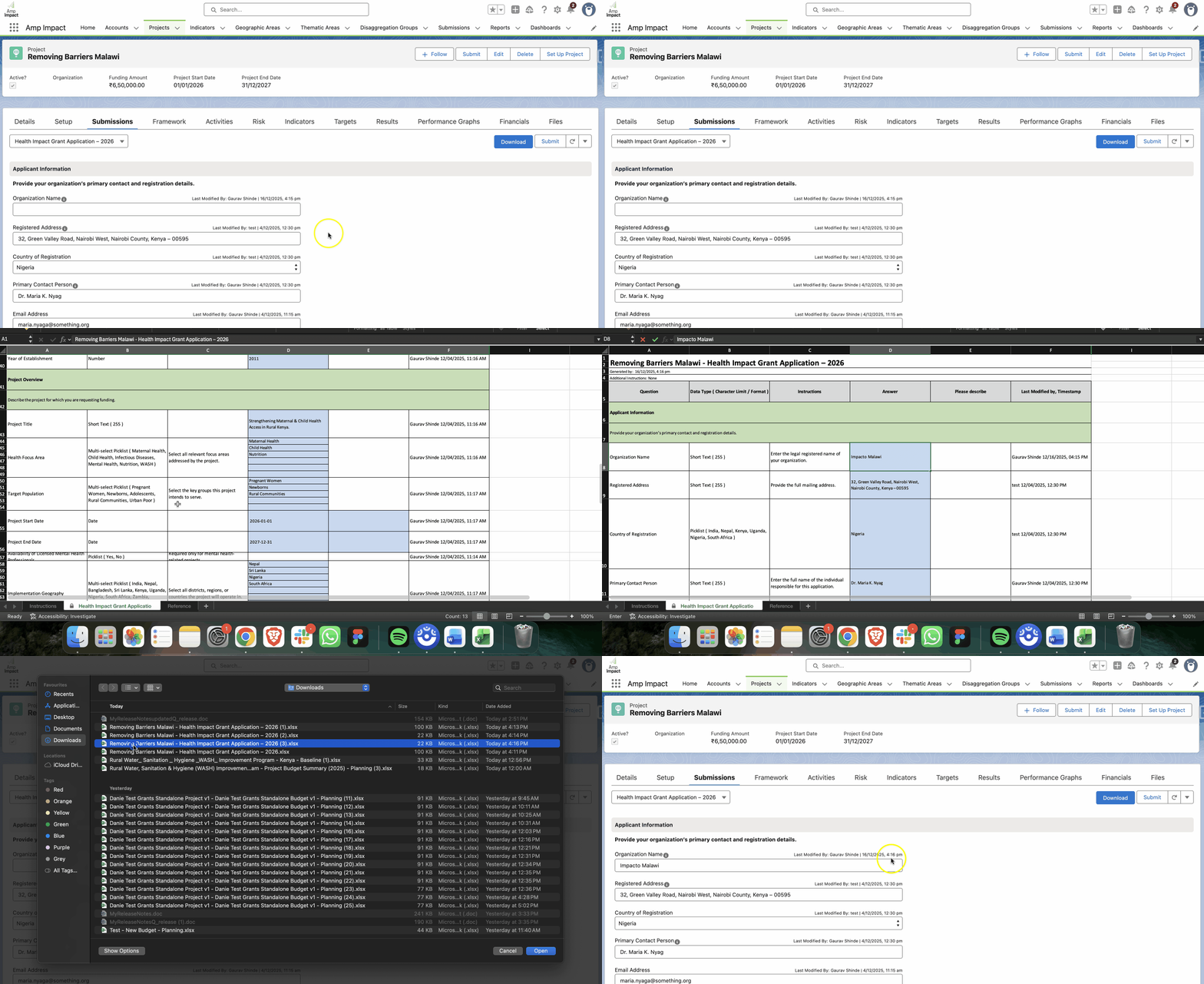
Previously, country program documents, indicator entries, integrated work plans, and the annual report each lived on separate webpages that couldn’t communicate with one another, forcing staff to move data through Excel. Now, all of these sit in a single cross-linked module, and country offices can link their plans directly to the corporate strategic plan, including across overlapping cycles.
2. Execution phase
With decentralized data entry across more than a hundred country offices, regional offices, and central units, the previous setup made it unclear who could submit, edit, or approve what. Role-based access and hierarchical approval workflows now manage this end-to-end.
3. Monitoring and reporting phase
The annual report was previously assembled separately from the work plan and indicator data. It now draws directly from the Integrated Work Plan and from live indicators, and teams build their own custom dashboards on the same data, giving leadership a current view of the multi-year strategic plan instead of waiting for manual compilation.

Amp Impact for Grants Management: Real-Time Oversight Across Complex Portfolios
The Challenge
Managing grants across challenging environments has traditionally relied on spreadsheets and manual consolidation. For multi-donor funds, particularly those operating in conflict-affected areas, this creates real gaps in oversight and accountability.
How Amp Impact Helps?
Amp Impact, extended with a grant management add-on, centralizes the full grant lifecycle on one platform, replacing the spreadsheets and separate documents the team had been relying on.
1. Solicitation and onboarding
Program data, results, financials, risks, and reporting used to sit in spreadsheets, with teams working on different versions. The secretariat now runs calls for proposals in-system, and partners apply through a portal where concept notes are submitted, locked, reviewed, and converted into full applications without re-keying.
2. Implementation
With tens of millions across a complex, multi-partner portfolio, oversight had been hard to maintain. Each project now carries its risk register (consequences, likelihoods, treatment, monitoring, assessments) alongside its results framework, log frame, outputs, outcomes, and indicators, so program managers can monitor risk and progress in one place.
Amp Impact – Risk Management feature Overview
3. Financial management
Linking donor contributions to project spend was previously manual. Contributions with payment schedules can now be earmarked to a window or focus area, allocated to specific projects, and tracked through to paid disbursement in the same record.

4. Reporting
Annual reports had been narrative-heavy and hard to aggregate, just as donors were asking for more quantitative structure. Partners now enter results biannually against life-of-project targets, and the secretariat can roll up portfolio-wide delivery instead of compiling it project by project, shifting reporting from a compilation exercise to a clearer, evidence-based story.
Amp Impact for Performance Indicators: Linking Results to Resources
The Challenge
Results data spread across regional offices and thematic teams make it difficult to connect outcomes to the resources behind them, a common pain point that undermines strategic decision-making.
How Amp Impact Helps?
Amp Impact consolidates indicator data into a single platform, linking targets, results, geographic areas, and disaggregations across the full results-measurement lifecycle.
1. Design
Managing 200+ performance indicators across multiple thematic programs, with cross-disaggregations by geography, gender, age, and more, was unwieldy. Amp Impact now lets teams categorize indicators by type (numeric, milestone, and “extent of progress”), with disaggregations built into each indicator.
2. Data collection
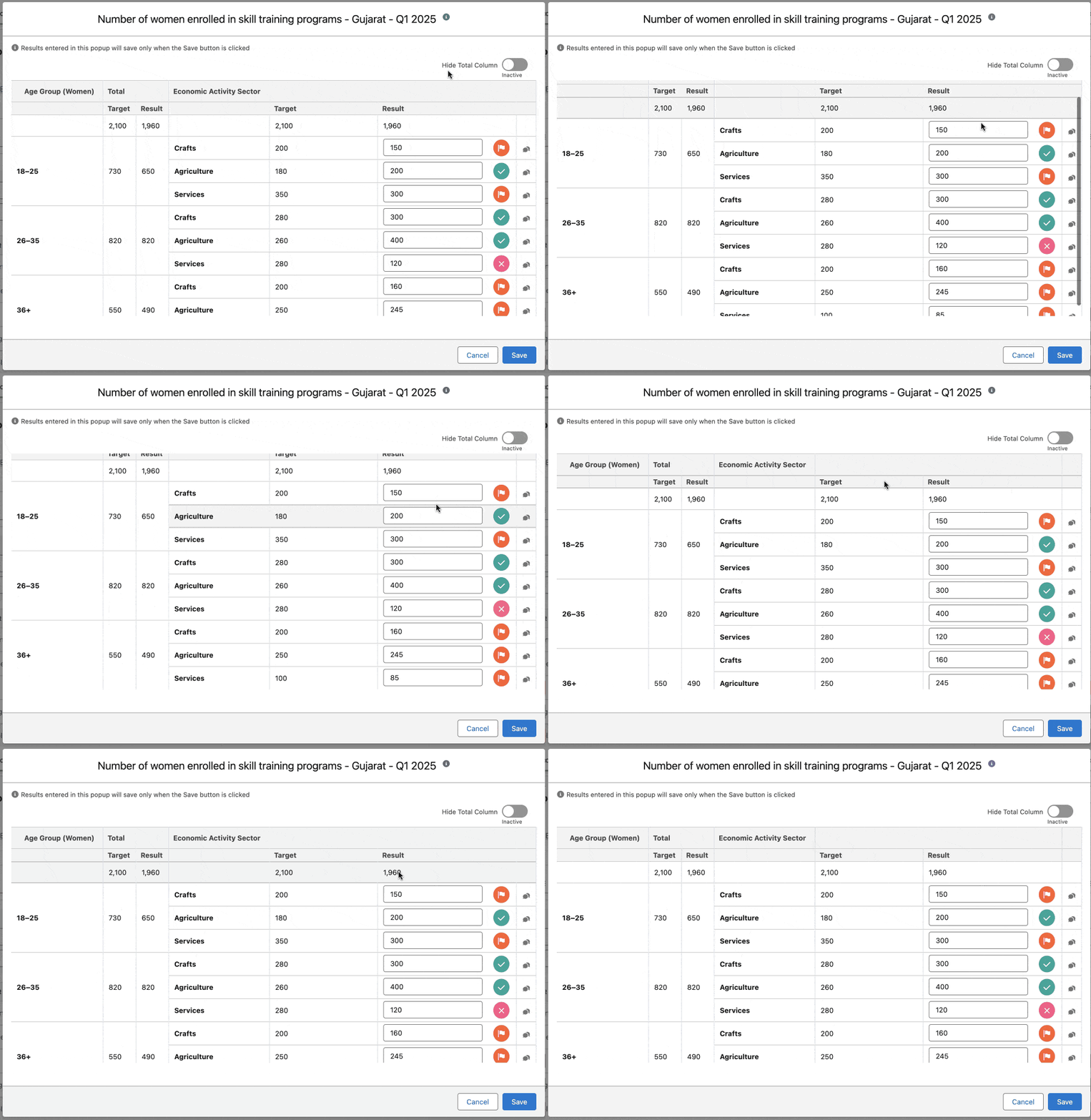
With dozens of field offices and HQ-driven projects all feeding the same indicators, consolidation across Excel sheets had been manual and laborious. A customized partner input interface now adapts to the project, showing indicators per area when countries are few, or transposing the table when many geographic areas are involved.

3. Analysis and decision-making:
Fragmented data made it hard to link results to resources, a critical mandate for the team. Live dashboards now surface aggregated results, sliced by region, project, or disaggregation, with role-based views for field, regional, and senior leadership. As one summit speaker put it: “The goal is really short: moving from fragmented information to coherent, actionable insights and supporting strategic decision-making and the linkage between results and resources.”
The Next Frontier: AI & Agentforce Opportunities
The summit also explored how AI capabilities, including Salesforce’s Agentforce, could build on a unified data foundation. The use cases shown include automating data pulls from partner reports, flagging underperforming outcomes, and handling routine partner queries, freeing up staff to focus on analysis and relationship management.

Curious what this could look like for your agency?
Amp Impact is currently used to manage more than $12.5 billion across programs, grants, and projects that advance the UN Sustainable Development Goals. If you’re thinking through how to bring your planning, grants, or results measurement onto one platform, we’re happy to share what we’ve learned from working with similar agencies.
You can request a demo, and we’ll walk through it using your own data, or just send us a note if you’d rather start with a few questions.
FAQs
What is Amp Impact, and how is it different from standard Salesforce?
Amp Impact is a 100% native Salesforce application built specifically for portfolio management, grant management, and impact measurement. While standard Salesforce provides a powerful CRM foundation, Amp Impact adds pre-configured data models, workflows, and reports tailored to nonprofits, funders, and UN agencies, including integrated work planning, grant management, indicator tracking, and risk management. Learn more.
How long does a typical Amp Impact implementation take for a UN agency?
Timelines vary based on scope and complexity. For focused implementations such as a grant management system or corporate planning tool, agencies can expect to go live in 3-6 months. Larger, enterprise-wide rollouts with multiple modules and global user bases typically take 6-12 months. Vera’s Implementation Services are designed to be collaborative and iterative, ensuring the solution meets your unique needs.
Can Amp Impact integrate with existing UN systems?
Yes. Amp Impact (built on Salesforce) includes robust APIs and integration tools that enable it to connect with existing enterprise systems, such as ERPs, financial systems, and data warehouses. Vera has extensive experience helping UN agencies navigate integration requirements, ensuring data flows seamlessly. Contact our team to discuss your specific integration needs.
Does Amp Impact support results-based management and SDG reporting?
Absolutely. Amp Impact was designed with results-based management principles at its core. The platform enables organizations to link activities to outputs, outcomes, and impact—aligning with SDG frameworks and standard UN reporting requirements. Indicator disaggregation, outcome mapping, and portfolio-level roll-ups are all native features.
What kind of training and support does Vera provide?
Vera offers comprehensive Enablement Services, including structured training programs, change management support, and ongoing managed services. Our goal is to build your team’s capacity and ensure long-term system ownership and user adoption. From initial administrator training to refresher workshops, we’re with you for the long haul.